

Nigeria’s Federal Government has reaffirmed its commitment to supporting small and medium-sized enterprises (SMEs), with Finance Minister Taiwo Oyedele stressing that their growth is essential to job creation, entrepreneurship, and the country’s economic ambitions.
Oyedele made the statement at the fourth edition of the Nigeria Sovereign Investment Authority (NSIA) Prize for Innovation Demo Day 2026 in Abuja on Saturday, October 24. He was represented at the event by Marie Ukpere, his Special Adviser on Investments.
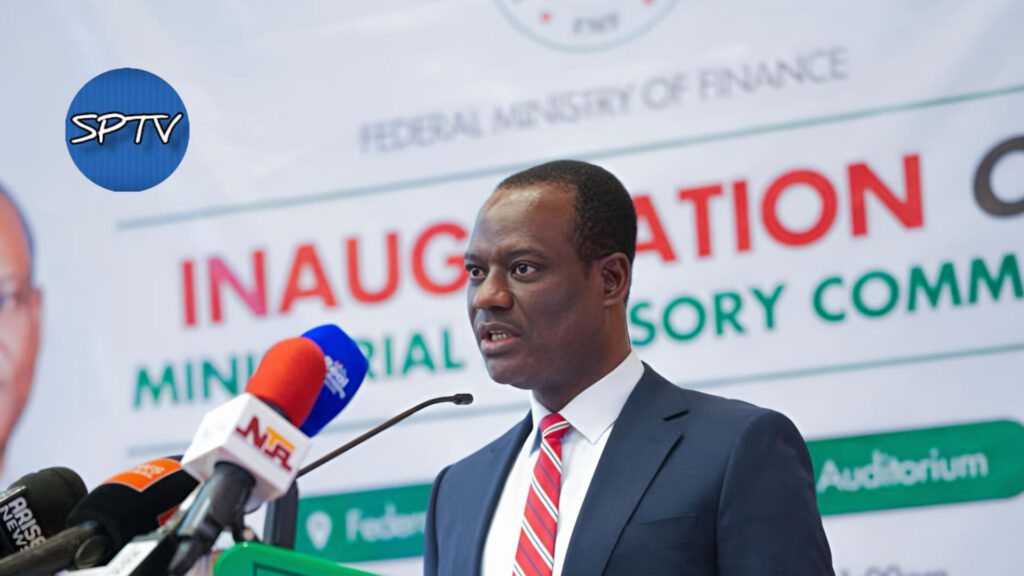
According to a report by the News Agency of Nigeria (NAN), the minister described small businesses as a major part of the Nigerian economy because they support livelihoods, provide employment, and contribute to economic activity across different sectors.0
He also emphasised that Nigeria’s ambition to build a trillion-dollar economy would depend partly on helping small businesses expand into medium-sized enterprises and eventually become larger companies capable of competing internationally.
The government, he said, was addressing financing and business capacity constraints through initiatives that include the Development Bank of Nigeria, the National Credit Guarantee Company, and the Investment in Digital and Creative Enterprises (iDICE) programme.
The discussion also highlighted the importance of venture capital, customer research, professional networks, and investment readiness in helping entrepreneurs build sustainable businesses.
Why the Government Wants to Support SMEs
Small and medium-sized enterprises play an important role in Nigeria’s economy. They operate across industries such as agriculture, manufacturing, retail, food processing, transportation, technology, and professional services.
These businesses provide products and services to consumers while creating opportunities for people to earn a living. Many also purchase goods from suppliers, use transport and distribution services, and employ workers as their operations expand.
Their economic contribution extends beyond the owners of individual businesses. When a company grows, it may create additional demand for suppliers, logistics providers, accountants, technology services, and other businesses.
This is one reason the Federal Government considers SME development important to its wider economic objectives.
At the NSIA Prize for Innovation Demo Day, Oyedele said Nigeria’s trillion-dollar economy ambition depended on helping smaller businesses grow into larger and more competitive companies.
The objective is not simply to increase the number of businesses operating in the country. It is also to help existing enterprises improve their productivity, expand their customer base, employ more people, and develop the capacity to compete in wider markets.
However, achieving this goal requires more than encouraging people to start businesses. Entrepreneurs also need access to suitable finance, business knowledge, reliable infrastructure, and customers willing to pay for their products and services.
The minister’s remarks placed these practical requirements at the centre of the government’s SME support agenda.
Access to Finance Remains a Major Business Challenge
Access to finance is an important consideration for Nigerian businesses seeking to expand.
A small company may have a product that customers want but lack the funds to purchase equipment, increase inventory, hire workers, or open another location. Without sufficient working capital, even a business with growth potential can struggle to meet orders or maintain regular operations.
Traditional bank lending can also be difficult for smaller businesses. Some lack sufficient collateral, an established credit history, or financial records that make it easier for lenders to assess their ability to repay a loan.
These challenges can limit the amount of funding available to entrepreneurs, particularly those whose businesses are still developing.
Oyedele said the government was addressing financing and capacity constraints through several initiatives, including the Development Bank of Nigeria and the National Credit Guarantee Company.
The National Credit Guarantee Company is intended to reduce lending risks and encourage financial institutions to provide more credit to eligible businesses, including SMEs and manufacturers. The idea behind a credit guarantee is to share part of the risk associated with qualifying loans, subject to the programme’s terms.
Such arrangements can help address one barrier to lending, but they do not automatically guarantee that every business will receive a loan. Financial institutions still need to assess borrowers, and businesses must understand the repayment obligations attached to any financing they obtain.
For entrepreneurs, the practical challenge is to identify suitable funding options and prepare the records and business plans required to access them.
Government Initiatives Highlighted by the Finance Minister
Oyedele identified several initiatives intended to support business development, improve access to finance, and encourage investment.
Development Bank of Nigeria
The Development Bank of Nigeria is designed to improve access to finance for micro, small, and medium-sized enterprises through participating financial institutions.
Its role is particularly relevant to businesses that need funding but face difficulties obtaining suitable credit through conventional channels.
The bank’s approach involves working with participating financial institutions rather than operating simply as a direct retail lender to every business owner. Entrepreneurs therefore need to understand which institutions participate in relevant programmes and what eligibility conditions apply.
Access to finance can help businesses invest in equipment, improve operations, purchase inventory, and expand their activities. However, the suitability of a loan depends on its cost, repayment period, and the business’s ability to generate sufficient cash flow.
National Credit Guarantee Company
The National Credit Guarantee Company was another initiative cited by Oyedele.
Its stated purpose includes reducing lending risks and encouraging financial institutions to extend more credit to SMEs and manufacturers.
The broader economic goal is to help viable businesses obtain financing that might otherwise be difficult to secure.
For this approach to produce meaningful results, businesses must be able to understand the available schemes, meet their eligibility requirements, and demonstrate that they can use the funding productively.
The impact will also depend on the participation of financial institutions and the actual terms under which credit becomes available.
Investment in Digital and Creative Enterprises
The Investment in Digital and Creative Enterprises programme, commonly known as iDICE, was also highlighted during the event.
The programme is intended to support entrepreneurs in Nigeria’s technology and creative industries through financing, skills development, and business support.
These sectors can offer opportunities for young Nigerians to develop products and services for local and international markets. However, turning an idea into a sustainable company often requires more than technical creativity.
Entrepreneurs may need help developing a business model, attracting customers, managing finances, protecting intellectual property, and preparing for investment.
Support that combines finance with business development can help founders address these challenges as their companies grow.
The exact assistance available depends on the programme’s current arrangements and eligibility criteria. Entrepreneurs should consult official programme information before assuming that a particular type of funding or support is available to them.
NSIA Supports Investment in Promising Nigerian Businesses
The Nigeria Sovereign Investment Authority also featured prominently in the minister’s remarks.
Oyedele said the NSIA was supporting venture capital funds to mobilise institutional investment into promising Nigerian businesses.
Venture capital generally involves investing in companies with growth potential in exchange for an ownership interest. Unlike a conventional loan, equity investment does not usually require the business to make scheduled principal repayments, but founders may have to share ownership and certain decision-making rights with investors.
This form of funding can be relevant to companies seeking to expand rapidly, especially those developing new products, technology, or business models.
However, venture capital is not suitable for every SME. Investors usually look for businesses with a credible growth strategy, a sizeable market opportunity, a capable management team, and a realistic path towards generating returns.
Many small businesses may be better served by other options, such as working-capital loans, equipment finance, retained earnings, or carefully structured partnerships.
The important point is that Nigerian businesses need access to different forms of capital suited to their stages of development.
NSIA’s support for venture capital funds could contribute to this wider financing ecosystem by helping connect institutional investment with companies that have growth potential.
The eventual impact will depend on how much investment reaches eligible businesses, how effectively that capital is deployed, and whether the companies can build sustainable operations.
Entrepreneurs Urged to Understand Their Customers
Funding was not the only issue raised at the innovation event.
Affiong Williams, founder and chief executive officer of ReelFruit, advised entrepreneurs to understand their customers, build strong professional networks, and remain resilient in the face of economic challenges.
Williams, who served as one of the competition’s judges, emphasised that business owners should focus on meeting customer needs rather than concentrating solely on developing innovative products.
This advice addresses a common challenge for entrepreneurs: a product can be technically impressive without necessarily solving a problem that customers are willing to pay to address.
Understanding customers involves identifying the people most likely to buy a product, learning what they need, assessing their willingness to pay, and using feedback to improve the offering.
For example, a food-processing business may need to understand how customers choose products, what packaging they prefer, and how price affects their purchasing decisions. A technology company may need to identify the problem its software solves and establish whether potential users are willing to pay for it.
This research can help businesses avoid investing heavily in products that lack sufficient demand.
Williams also encouraged entrepreneurs to develop professional networks and build reputations for reliability, preparation, and credibility.
Strong networks can help business owners discover opportunities, obtain useful advice, meet potential suppliers, and establish relationships with investors.
She also shared that ReelFruit had raised more than $7 million in funding from individuals and institutions, according to the report.
Her experience illustrated the importance of combining an understanding of the market with the ability to build relationships and attract capital.
Why Investment Readiness Matters
Dave DeLucia, founder of Cascador and one of the sponsors of the NSIA Prize for Innovation, stressed the importance of capital readiness.
Businesses seeking investment need to prepare for the expectations of potential lenders and investors. This can require substantial time and effort, particularly for entrepreneurs who have limited experience with formal financing.
Investment readiness can involve maintaining accurate financial records, understanding operating costs, preparing realistic forecasts, documenting the business model, and explaining how additional capital would be used.
A company seeking funding to expand production, for example, should be able to explain how the investment would increase capacity, serve additional customers, or improve its financial performance.
Investors and lenders may also want to understand the company’s existing obligations, management structure, competitive position, and major risks.
DeLucia said Cascador supported technology and real-economy businesses through capital-readiness training and funding options. These options included working-capital credit lines, long-term debt, and equity, in partnership with Sterling Bank.
He also noted that entrepreneurs outside Lagos needed greater support to develop the capacity required to attract investment.
This is an important consideration for Nigeria’s business environment. Entrepreneurs may have viable ideas and local market knowledge but lack access to established investor networks, specialist advisers, and business development opportunities.
Expanding access to training, mentorship, and financing information could help businesses in different parts of the country prepare more effectively for growth.
However, investment readiness does not guarantee that funding will follow. Businesses still need to demonstrate commercial potential, and the terms offered must be appropriate for their needs.
Economic Challenges Still Affect Business Growth
The advice offered at the event comes against a backdrop of economic uncertainty for Nigerian entrepreneurs.
Williams encouraged business owners to remain resilient amid challenges that include currency fluctuations, policy changes, and macroeconomic instability.
These factors can affect operating costs, purchasing power, investment decisions, and the ability of businesses to plan for the future.
A company that depends on imported machinery or raw materials may be exposed to changes in foreign exchange rates. A retailer may face pressure when customers reduce spending, while a manufacturer may have to manage higher input costs and changing demand.
Businesses can respond by monitoring cash flow, reviewing costs, understanding their customers, and avoiding expansion plans that depend on unrealistic assumptions.
Access to appropriate finance may help some companies manage these pressures, but borrowing also creates obligations that must be repaid. Business owners need to assess whether the expected returns from an investment justify the cost and risk of financing it.
Government support can improve the environment in which SMEs operate, but its effectiveness depends on how accessible the programmes are and whether they address the challenges businesses actually face.
The relationship between funding, business skills, and economic conditions is therefore central to the question of how SMEs can contribute more to Nigeria’s growth.
Why SME Support Matters for Nigeria’s Trillion-Dollar Economy Ambition
Nigeria’s ambition to build a trillion-dollar economy requires growth across productive sectors and the development of businesses capable of creating value at a larger scale.
SMEs can contribute by developing new products, improving local supply chains, increasing productivity, and creating employment opportunities.
Some may eventually become large domestic companies or expand into other African markets. Others may remain smaller enterprises but still provide important services and jobs within their communities.
Supporting these businesses is not only about providing financial assistance. It also involves creating conditions that allow entrepreneurs to operate predictably, find customers, hire skilled workers, and invest in improved production methods.
The initiatives cited by Oyedele address several parts of this challenge, including access to finance, business development, and investment.
Yet the real test will be whether eligible businesses can access the support and use it to build sustainable operations.
Useful measures of progress would include whether more viable businesses obtain appropriate financing, whether supported companies increase productivity, and whether they create jobs and remain operational over time.
Without such outcomes, announcements about support programmes alone cannot demonstrate that the underlying challenges have been resolved.
What Happens Next?
The government has reaffirmed its commitment to supporting SMEs, but entrepreneurs will need clear information about the opportunities available to them.
Business owners should monitor official announcements from relevant government institutions and programme administrators for eligibility requirements, application procedures, financing terms, and deadlines.
They should also prepare their businesses before seeking funding. This includes maintaining accurate records, understanding operating costs, identifying customers, and developing realistic plans for how additional capital would be used.
Entrepreneurs who are not immediately ready for investment may benefit from mentorship, training, and professional advice while strengthening their operations.
For policymakers, the challenge is to ensure that support programmes reach businesses with genuine needs and growth potential. Transparent requirements, accessible information, and effective programme delivery can help make public and institutional support more useful.
The NSIA Prize for Innovation also highlights the importance of looking beyond the competition itself. As Oyedele told the finalists, the long-term measure of success is the businesses they establish after the event.
That principle applies more broadly to SME development. The goal is not simply to fund ideas or recognise promising entrepreneurs, but to help create businesses that can survive, grow, employ people, and contribute to the wider economy.
Final Thoughts
Finance Minister Taiwo Oyedele has reaffirmed the Federal Government’s commitment to supporting small and medium-sized enterprises as part of Nigeria’s wider economic growth ambitions.
Speaking at the 2026 NSIA Prize for Innovation Demo Day in Abuja, he highlighted the importance of helping small businesses expand and become more competitive. He also pointed to initiatives such as the Development Bank of Nigeria, the National Credit Guarantee Company, and the iDICE programme.
The event placed equal emphasis on business fundamentals. Entrepreneurs were encouraged to understand their customers, build professional networks, prepare for investment, and remain resilient in a challenging economic environment.
These priorities reflect the different requirements for building sustainable businesses. Finance can support expansion, but companies also need sound management, market demand, and the ability to meet their obligations.
Ultimately, the effectiveness of Nigeria’s SME support efforts will depend on whether businesses can access suitable assistance and turn it into lasting economic value, including productive activity and employment.
Frequently Asked Questions
1. Why is the Nigerian government supporting SMEs?
The government considers SMEs important to economic growth, job creation, entrepreneurship, and the development of larger Nigerian companies that can compete in international markets.
2. Which SME support initiatives did Finance Minister Taiwo Oyedele highlight?
Oyedele cited the Development Bank of Nigeria, the National Credit Guarantee Company, and the Investment in Digital and Creative Enterprises programme. He also noted the NSIA’s support for venture capital funds investing in promising Nigerian businesses.
3. What can Nigerian SMEs do to improve their chances of attracting investment?
Businesses can strengthen their financial records, understand their target customers, prepare realistic growth plans, build professional networks, and demonstrate how additional funding would support sustainable operations. Investment is not guaranteed, and eligibility depends on the requirements of each lender, investor, or support programme.