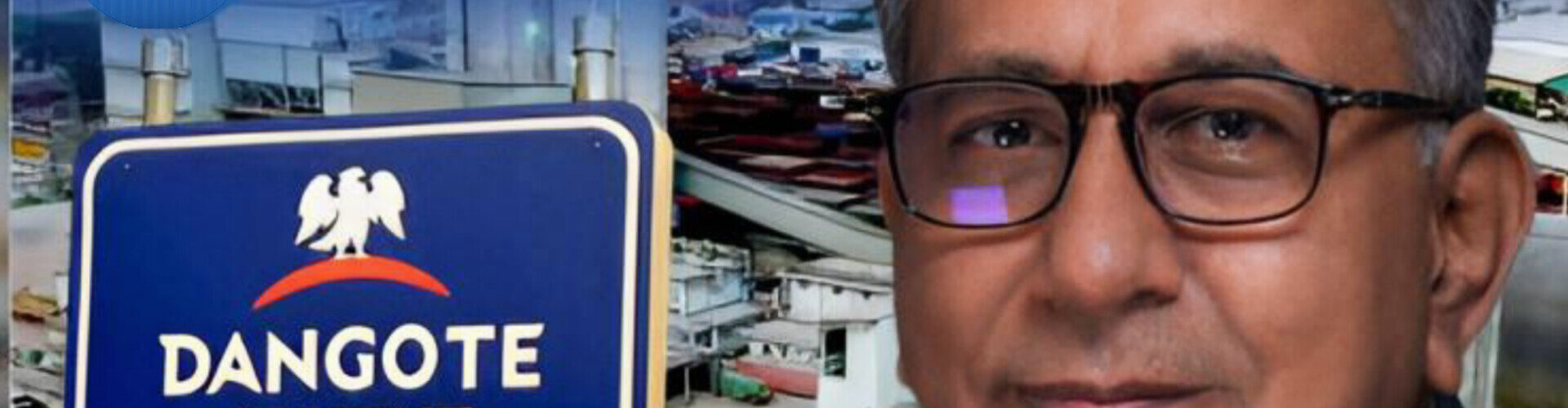
Few executive compensation stories in Nigeria attracted as much attention in 2026 as the pay package of Dangote Cement Group Managing Director and Chief Executive Officer Arvind Pathak.
According to the company’s audited financial statements, Pathak earned ₦1.659 billion during the 2025 financial year, up from ₦1.583 billion in 2024. The increase was modest at roughly 4.8%.
What makes the figure stand out is not the size of the increase, but the performance of the company he leads.
Dangote Cement delivered one of the strongest financial years in its history, with profit after tax surging to ₦1.01 trillion from ₦503.2 billion in 2024. The result represented growth of 101.67%, effectively doubling profits within a single year and placing Dangote Cement among a small group of Nigerian companies to cross the trillion-naira profit mark.
For investors, the comparison raises an interesting question.
How did the chief executive’s pay rise by less than 5% while shareholder earnings more than doubled?
The answer says a lot about how Dangote Cement structures executive compensation, rewards shareholders, and positions itself for long-term expansion across Africa.
A Trillion Naira Profit Year
The headline figure from Dangote Cement’s 2025 results was impossible to ignore.
Profit after tax reached ₦1.01 trillion.
Crossing the trillion-naira threshold represents more than a financial milestone. It places the company among the largest and most profitable businesses on the Nigerian Exchange and strengthens its position as Africa’s leading cement producer.
Revenue also climbed sharply.
The company generated ₦4.31 trillion in revenue during the year, compared with ₦3.58 trillion in 2024, representing growth of 20.28%.
The combination of stronger revenue growth and improved profitability suggests Dangote Cement benefited from a mix of higher sales volumes, improved pricing, operational efficiencies, and stronger performance across several markets.
For shareholders, the results translated directly into higher earnings and larger returns.
Shareholders Received a Record Dividend
Strong profits usually lead to one question from investors.
How much of those earnings will be returned to shareholders?
Dangote Cement answered that question with another record.
Shareholders approved a dividend of ₦45 per share at the company’s Annual General Meeting held on July 2, 2026.
The payout represented a 50% increase over the ₦30 per share declared the previous year.
In total, the company distributed approximately ₦753.8 billion to shareholders.
The increase reinforces Dangote Cement’s reputation as one of the Nigerian market’s strongest dividend-paying companies and highlights management’s confidence in the sustainability of earnings.
The higher payout was also supported by stronger earnings per share.
EPS rose to ₦59.86 during the year, giving the company ample room to increase distributions while maintaining financial flexibility for future investments.
Arvind Pathak’s Compensation Story Looks Different
Against that backdrop, Pathak’s compensation attracted attention.
His total remuneration rose to ₦1.659 billion from ₦1.583 billion in 2024.
For some observers, the figure appears large in isolation.
Viewed alongside the company’s financial performance, however, the increase looks relatively modest.
While profits increased by more than 100%, executive compensation increased by less than 5%.
This suggests that Dangote Cement’s remuneration structure places limits on short-term pay growth and ties rewards to longer-term corporate performance rather than single-year profit swings.
Corporate governance experts often view this type of approach positively because it aligns executive incentives with shareholder interests over extended periods.
Investors generally become concerned when executive pay rises significantly faster than company performance.
In Dangote Cement’s case, the opposite happened.
The company’s profits, dividends, and earnings per share expanded far faster than executive remuneration.
The Industry Veteran Behind the Numbers
Arvind Pathak is not new to the cement business.
He assumed the role of Group Managing Director and Chief Executive Officer of Dangote Cement on March 1, 2023, after previously serving as Deputy Group Managing Director and Chief Operating Officer.
By the time he took over as chief executive, he had already accumulated more than three decades of industry experience.
His career spans over 36 years in the cement sector across multiple markets and leadership roles.
Before joining Dangote Cement, he served as Chief Executive Officer of Birla Corporation in India and also held senior leadership positions at Reliance Cement.
His academic background reflects a similar focus on engineering and management.
Pathak obtained an engineering degree in 1980 before completing postgraduate studies at the Indian Institute of Technology Banaras Hindu University and the Indian Institute of Management Mumbai.
That blend of technical expertise and executive experience has become increasingly valuable in an industry where operational efficiency often determines profitability.
Managing Scale Across Africa
Leading Dangote Cement means managing one of Africa’s largest industrial operations.
The company currently operates in 11 African countries with installed production capacity of approximately 55 million tonnes per year.
Its footprint extends far beyond Nigeria and includes some of the continent’s fastest-growing construction markets.
Operating across multiple countries provides diversification benefits.
Weakness in one market can often be offset by stronger demand elsewhere, reducing earnings volatility and supporting long-term growth.
The strategy also allows Dangote Cement to benefit from urbanisation, infrastructure spending, and housing development trends taking place across Africa.
Maintaining consistency across operations of this scale requires disciplined management, efficient logistics, and careful capital allocation.
The 2025 results suggest the company largely succeeded in balancing those priorities.
Expansion Plans Continue
Dangote Cement is not slowing down.
Management has set an ambitious target of increasing installed production capacity from 55 million tonnes per year to 80 million tonnes annually by 2030.
Achieving that goal would further strengthen its position as Africa’s largest cement producer.
The company already made progress toward that objective during 2025 with the commissioning of a new plant in Côte d’Ivoire.
The investment expands Dangote Cement’s presence in West Africa and positions it to benefit from rising demand for cement and infrastructure materials across the region.
Population growth, urban development, road construction, and industrial expansion continue driving long-term cement demand throughout Africa.
The company clearly intends to remain at the centre of that growth story.
Why Investors Should Pay Attention
The most important lesson from Dangote Cement’s results is not the chief executive’s compensation package.
It is the relationship between management performance and shareholder returns.
Investors received:
- Profit growth of more than 100%.
- Revenue growth above 20%.
- A record dividend payout.
- Higher earnings per share.
- Continued expansion across Africa.
Those are the figures long-term shareholders tend to prioritise.
Executive compensation often attracts headlines because it is easy to understand and easy to debate.
Corporate performance is ultimately what drives investment returns.
By that measure, 2025 was one of the strongest years in Dangote Cement’s history.
The Bigger Question for 2026
The challenge now shifts from growth to sustainability.
Doubling profits in a single year creates difficult comparisons for future results.
Investors will closely watch whether the company can maintain revenue momentum while controlling costs and preserving margins.
They will also monitor progress toward the 80 million tonnes production target and evaluate how quickly newer facilities contribute to earnings growth.
Another key area will be shareholder returns.
After increasing dividends by 50% this year, expectations for future payouts are likely to rise.
Management will need to balance rewarding investors with funding future expansion projects across Africa.
What This Means for Nigerian Corporate Leadership
The contrast between Pathak’s modest pay increase and Dangote Cement’s exceptional financial performance offers an interesting example for Nigerian corporate governance discussions.
In recent years, debates around executive pay have become more common as shareholders increasingly demand stronger alignment between compensation and company performance.
Dangote Cement’s numbers suggest such alignment may already exist.
While shareholders benefited from record profits and record dividends, executive compensation growth remained relatively restrained.
That balance is likely to strengthen investor confidence in the company’s governance practices and long-term strategy.
Related: [GTCO Pays Record ₦12.76 Dividend Per Share Even as 2025 Profit Falls]
Arvind Pathak’s ₦1.659 billion compensation package will attract headlines because large executive salaries always do.
The bigger story, however, lies elsewhere.
Dangote Cement doubled profits, increased revenue above ₦4 trillion, approved a record dividend, expanded its African footprint, and continued pursuing one of the continent’s most ambitious industrial growth plans.
Against those numbers, the chief executive’s modest pay increase becomes a smaller part of a much larger story.
For investors, the real takeaway is simple.
Dangote Cement delivered one of the strongest corporate performances in Nigeria during 2025, and management is signalling that the growth story is far from over.
Frequently Asked Questions
How much did Arvind Pathak earn in 2025?
Dangote Cement CEO Arvind Pathak earned ₦1.659 billion in total remuneration during the 2025 financial year.
How much did Dangote Cement’s profit grow in 2025?
Profit after tax rose to ₦1.01 trillion from ₦503.2 billion in 2024, representing growth of 101.67%.
How much revenue did Dangote Cement generate in 2025?
The company reported revenue of ₦4.31 trillion, up 20.28% from ₦3.58 trillion in 2024.
What dividend did Dangote Cement pay shareholders?
Shareholders approved a dividend of ₦45 per share, up from ₦30 per share the previous year.
When did Arvind Pathak become CEO of Dangote Cement?
He became Group Managing Director and Chief Executive Officer on March 1, 2023.
How many countries does Dangote Cement operate in?
Dangote Cement operates in 11 African countries with installed capacity of 55 million tonnes per year.
What is Dangote Cement’s production target for 2030?
The company aims to increase installed production capacity to 80 million tonnes annually by 2030.