

For much of the past two years, the biggest question hanging over Oando was whether its massive bet on the Nigerian Agip Oil Company assets would pay off.
The acquisition was expensive, debt-heavy, and arrived at a time when many investors were already worried about rising financing costs and uncertainty in Nigeria’s upstream sector.
In 2025, Oando finally delivered its answer.
The company reported a profit after tax of ₦204.8 billion, equivalent to roughly $137 million, for the financial year ended December 31, 2025. The results, disclosed in audited financial statements filed with the Nigerian Exchange on July 7, 2026, marked a return to profitability and one of the strongest years in the company’s recent history.
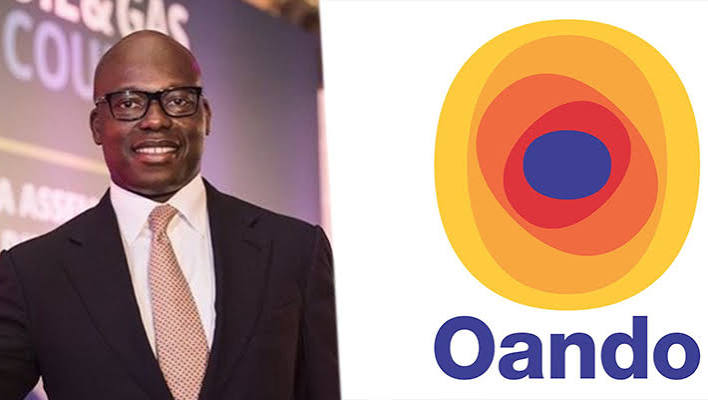
For Group Chief Executive Wale Tinubu, the numbers represent more than a successful financial year. They are increasingly being viewed as validation of one of the biggest strategic decisions in Oando’s history.
From Acquisition Mode to Execution Mode
The 2024 acquisition of the Nigerian Agip Oil Company Joint Venture assets transformed Oando overnight.
The deal significantly expanded the company’s reserve base, increased production potential, and elevated Oando into the top tier of indigenous Nigerian energy producers.
However, acquisitions alone do not create value.
The real challenge begins after the deal closes.
Companies must integrate operations, improve efficiency, maintain production reliability, and generate enough cash flow to justify the investment.
That is where Oando appears to have made its biggest progress during 2025.
Management described the year as a transition from acquisition-led growth to operational execution and balance-sheet optimisation.
Instead of focusing on buying assets, attention shifted toward extracting more value from assets already acquired.
For investors, that distinction matters.
Energy markets have seen countless examples of companies that excel at acquisitions but struggle with integration. Oando’s 2025 performance suggests the company may be avoiding that trap.
Production Growth Drove the Recovery
The clearest evidence of operational improvement came from production numbers.
Average daily production increased by 32 percent to 32,482 barrels of oil equivalent per day.
The growth was driven by stronger uptime, improved reliability, and higher output across crude oil, natural gas, and associated products.
This was particularly important because 2025 represented Oando’s first full year operating the former NAOC assets after taking control in 2024.
Investors were eager to see whether the company could maintain production levels under indigenous management.
The results suggest it could.
Production growth of this scale is significant in an industry where maintaining existing output levels often proves difficult due to ageing infrastructure, pipeline disruptions, and operational challenges.
The increase also provided the foundation for stronger revenues, higher cash generation, and improved profitability.
The Obiafu-41 Well Became a Symbolic Milestone
Among the year’s operational achievements, one project stood out.
Oando completed and started production from the Obiafu-41 gas-condensate well, becoming the first development well drilled by the company since assuming operatorship of the former Agip assets.
The project carried significance beyond its production contribution.
For Wale Tinubu, it demonstrated that Nigerian companies possess the expertise and operational capability required to manage complex upstream projects without relying on international oil majors.
That message aligns with a broader transformation taking place across Nigeria’s energy sector.
Companies such as Oando, Seplat, and Renaissance are increasingly taking over assets once controlled by multinational energy firms.
Successes like Obiafu-41 strengthen the argument that indigenous operators are capable of managing those assets effectively while maintaining international safety standards.
Safety Performance Strengthened Investor Confidence
Operational growth often comes with higher risks.
Increasing production, drilling new wells, and integrating acquired assets can place pressure on safety systems and operational procedures.
Oando’s 2025 results showed little evidence of that pressure.
The company reported zero fatalities and zero lost-time injuries during the year.
Its total recordable incident rate stood at only 0.05.
For an upstream energy company, these numbers are particularly important.
Large institutional investors increasingly evaluate environmental, social, and governance performance alongside financial results.
Strong safety records reduce operational disruptions, lower financial risks, and improve investor confidence.
In a sector where accidents can lead to production shutdowns and reputational damage, Oando’s safety performance became one of the quieter success stories within the results.
Cash Generation Was Equally Impressive
Profit figures often receive the headlines.
Cash generation usually tells the deeper story.
During 2025, Oando generated ₦258.3 billion in cash from operating activities.
The company also ended the year with ₦422.9 billion in cash and cash equivalents.
That represented an increase of 172 percent compared with the previous year.
Strong cash balances give companies flexibility.
They allow management to invest in new projects, reduce debt, withstand periods of lower oil prices, and pursue additional growth opportunities.
For Oando, this cash position is particularly important given the scale of the NAOC acquisition and the investment commitments associated with operating larger upstream assets.
The figures suggest the company is generating enough liquidity to support future growth while strengthening its balance sheet.
Trading Volumes and Reserves Also Expanded
Production was not the only area showing momentum.
Crude trading volumes rose by 24 percent to 25.7 million barrels during the year.
The company also reported proved and probable reserves of 928 million barrels of oil equivalent.
Reserve numbers are among the most important metrics in the upstream industry because they provide an indication of future production potential.
A larger reserve base supports longer production life, improves valuation multiples, and increases confidence in future earnings capacity.
Combined with rising production, Oando’s reserve position places it among the most significant indigenous operators in Nigeria’s energy market.
Why Profitability Returned
The return to profit was supported by several factors.
Higher production volumes naturally increased revenues and operating cash flow.
The company also benefited from impairment reversals and tax credits, which improved reported earnings during the year.
Importantly, management has not attempted to present these gains as the sole driver of performance.
The stronger operational results suggest profitability improvements were supported by genuine business growth rather than accounting adjustments alone.
That distinction matters because investors typically place more value on recurring operating performance than on temporary gains.
The 2026 Targets Are Even More Ambitious
If 2025 was about proving the acquisition could work, 2026 appears focused on scaling it.
Oando is targeting production of between 40,000 and 50,000 barrels of oil equivalent per day this year.
Even the lower end of that range would represent growth of more than 25 percent compared with 2025 averages.
The company also plans to drill seven wells across OMLs 60 to 63.
To support those plans, management has allocated between $90 million and $100 million toward short-cycle upstream projects.
These investments are designed to deliver faster production increases and quicker returns on capital.
The targets are ambitious, but they also suggest management believes operational momentum remains strong.
A Defining Moment for Wale Tinubu
Few executives tie their reputation to a single transaction.
Wale Tinubu effectively did exactly that with the NAOC acquisition.
The scale of the deal attracted scepticism from analysts who questioned whether Oando could successfully integrate the assets while managing the financial burden associated with the purchase.
The 2025 results do not end that debate.
Oil prices remain volatile, production risks remain real, and long-term execution will ultimately determine whether the acquisition delivers its full potential.
What the numbers do show is that Oando has cleared an important early hurdle.
Production has increased, profitability has returned, cash generation has strengthened, and operational milestones continue to be achieved.
For now, the market appears to be viewing those outcomes as evidence that the strategy is working.
Why Investors Should Pay Attention
Oando’s results reflect more than one company’s recovery.
They also represent a broader shift taking place across Nigeria’s energy industry.
As international oil companies continue reducing their exposure to onshore assets, indigenous operators are assuming greater responsibility for production, investment, and energy security.
The success or failure of companies like Oando will shape investor confidence in that transition.
For now, Oando’s latest numbers suggest Nigerian operators are increasingly proving they can compete at scale.
Related:[GTCO Pays Record ₦12.76 Dividend Per Share Even as 2025 Profit Falls]
Frequently Asked Questions
How much profit did Oando report for 2025?
Oando reported profit after tax of ₦204.8 billion for the financial year ended December 31, 2025.
How much did Oando increase production in 2025?
Average daily production increased by 32 percent to 32,482 barrels of oil equivalent per day.
What caused Oando’s return to profitability?
The turnaround was supported by higher production, improved operational reliability, impairment reversals, tax credits, and stronger cash generation.
What is Oando targeting for 2026 production?
The company expects production to reach between 40,000 and 50,000 barrels of oil equivalent per day.
How much cash did Oando generate in 2025?
Oando generated ₦258.3 billion in operating cash flow and ended the year with ₦422.9 billion in cash and cash equivalents.
What was Oando’s major operational milestone in 2025?
The company completed and started production from the Obiafu-41 gas-condensate well, its first development well after taking over the former NAOC assets.
Why is the NAOC acquisition important?
The acquisition transformed Oando into one of Nigeria’s largest indigenous upstream operators and significantly expanded its reserves and production potential.