

OpenAI has introduced ChatGPT Wallet, a new payment feature designed to let its AI agents complete purchases on behalf of users.
Announced on November 13, 2026, the feature gives users a way to ask their personal AI agent, known as a dot, to handle shopping tasks and complete checkout. Users still review and approve every purchase before payment takes place.
ChatGPT Wallet uses payment tokens instead of exposing a user’s actual card details to the AI agent or merchant. Each purchase also requires a security check, such as Face ID or Touch ID, before the transaction proceeds.
OpenAI developed the feature in partnership with American Express, Mastercard and Visa. The company is initially rolling out ChatGPT Wallet to eligible ChatGPT Pro subscribers aged 18 and above in the United States.
The launch marks another step in OpenAI’s effort to move ChatGPT beyond answering questions and completing digital tasks. With the new wallet, users can ask their AI agents to find products, compare options and handle purchases with their approval.
What Is ChatGPT Wallet?
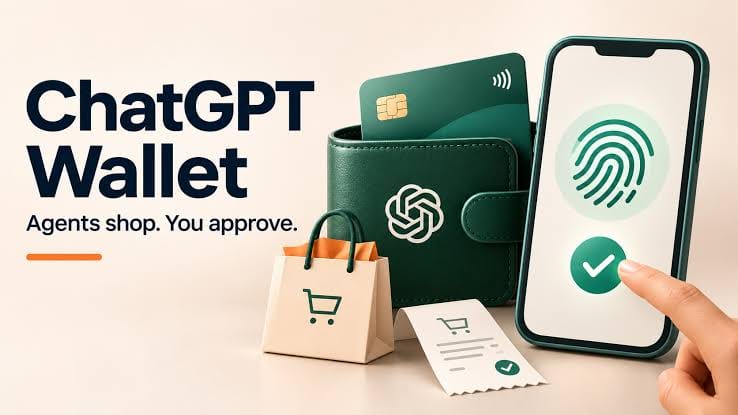
ChatGPT Wallet is a payment feature designed to let OpenAI’s AI agents pay for purchases on behalf of users.
Previously, users relied on ChatGPT to research products, compare prices and identify suitable options. They still needed to complete the payment process themselves.
The new wallet adds another stage to this process.
Users can ask their dot to find a product or service and proceed with the purchase. When checkout begins, ChatGPT Wallet provides a secure payment process that requires the user’s approval.
For example, someone shopping for a new sweater can ask their dot to find suitable options. After choosing a product, the user can ask the agent to complete the purchase.
Before payment, the user reviews the merchant, selected items, total cost and payment card. They then approve the transaction through a supported security check.
OpenAI says the wallet keeps the user’s actual card details hidden from the agent and the business receiving the payment.
The feature also preserves eligible card rewards and protections for qualifying disputes.
How ChatGPT Wallet Handles Payments
ChatGPT Wallet follows a process designed to separate the user’s actual card information from the payment details used during checkout.
Users add an eligible payment card to the wallet. They then review and approve each purchase when their dot reaches the payment stage.
The process follows several steps.
1. Users Add a Payment Card
The first step involves adding an eligible payment card to ChatGPT Wallet.
Users save their card details once rather than entering them every time their dot completes a purchase.
The wallet stores the payment information securely and allows users to manage their saved cards.
OpenAI says these saved cards are separate from the payment method used for a ChatGPT subscription.
This distinction means a card saved in ChatGPT Wallet does not automatically replace the payment method attached to a user’s ChatGPT subscription.
2. The AI Agent Prepares the Purchase
After a user asks their dot to buy something, the agent handles the shopping and checkout process.
The agent identifies the selected product, prepares the order and reaches the merchant’s payment stage.
Before completing the transaction, ChatGPT Wallet presents the important purchase details for review.
These include:
- The merchant receiving the payment.
- The selected products or services.
- The total purchase amount.
- The payment card selected for the transaction.
- Any shipping or recurring payment terms shown.
This review gives users an opportunity to check the order before approving the payment.
3. Users Approve the Transaction
Every purchase requires a separate approval.
Users review the transaction and complete a security check before the payment proceeds.
OpenAI identifies biometric verification methods such as Face ID and Touch ID as supported approval options.
This requirement adds a layer of user control. An AI agent does not receive automatic permission to spend money simply because a card is saved in the wallet.
If the user does not approve the request, the purchase does not proceed through the approval process.
4. ChatGPT Wallet Uses a Payment Token
After approval, the payment network provides a payment token.
A payment token acts as a substitute for the user’s actual card details. It includes payment credentials such as a card number, security code and expiration date.
The agent uses this substitute information to complete checkout.
The merchant receives the payment credential required to process the transaction, rather than the user’s actual card details.
OpenAI says this approach keeps the original card information hidden from both the AI agent and the business.
The payment is still charged to the user’s selected card.
5. The Agent Completes Checkout
Once the user approves the transaction and completes the security check, the dot continues the checkout process.
The agent then reports the outcome.
However, approval does not guarantee the merchant has successfully placed the order. A website might decline the transaction, encounter a technical problem or fail to complete checkout.
OpenAI advises users to check the merchant’s confirmation before assuming an order has been placed.
This distinction is important because ChatGPT Wallet handles payment authorization, while the merchant still controls order acceptance, fulfillment, shipping and customer service.
OpenAI Partners With Visa, Mastercard and American Express

OpenAI developed ChatGPT Wallet with support from major payment networks and financial institutions.
The initial partners include American Express, Mastercard and Visa.
These partnerships help connect AI-led purchases with existing payment systems.
Instead of requiring businesses to adopt an entirely separate payment infrastructure, ChatGPT Wallet uses payment tokens designed to work with existing checkout processes.
OpenAI also says users retain their existing card rewards and protections for eligible disputes.
For example, a qualifying dispute involving a defective product will continue to fall under the applicable card protections.
The company is also working with payment service providers and fraud prevention companies to improve how businesses identify legitimate purchases made through AI agents.
Its listed partners include Adyen, Checkout.com and Stripe for payment services, alongside Forter, Riskified, Sardine and Signifyd for fraud prevention.
These partnerships address a challenge facing agent-led commerce.
Businesses need to distinguish legitimate purchases made by AI agents from suspicious automated activity. Without suitable recognition systems, fraud prevention tools might block valid transactions.
OpenAI says it is working with these partners to improve compatibility and reduce unnecessary payment declines.
ChatGPT Wallet Is Initially Limited to US Pro Subscribers
OpenAI is introducing ChatGPT Wallet gradually rather than making the feature available to every user immediately.
According to the company’s announcement and Help Center documentation, the initial rollout covers:
- ChatGPT Pro subscribers.
- Users aged 18 or older.
- People living in the United States.
- Users with eligible US-issued payment cards.
- Cards linked to a US billing address.
The supported payment options include eligible American Express, Chase, Mastercard and Visa cards.
The Help Center also states that users must set up a dot before using ChatGPT Wallet.
The wallet currently works in conversations with a dot. It is not available in ordinary ChatGPT conversations, ChatGPT Work or standalone Codex threads.
This means users outside the United States, including those in Nigeria, should not assume the feature is available in their accounts.
OpenAI says the initial rollout will help the company learn from real-world use and improve compatibility with businesses, banks and payment networks before expanding access.
The company has not announced a confirmed global launch date.
What Happens to Card Rewards and Purchase Protection?
A major part of ChatGPT Wallet’s design involves preserving existing card benefits.
OpenAI says users retain the rewards associated with their selected cards.
The company also says eligible disputes continue to receive the protections attached to the payment card.
This matters because users might hesitate to let AI agents handle payments if doing so removes the benefits associated with their existing cards.
With ChatGPT Wallet, the transaction still connects to the user’s selected card through a payment token.
The merchant receives the payment through its existing checkout process, while the card issuer’s applicable terms and protections continue to apply.
However, users should still review the merchant’s terms before approving a purchase.
Recurring payments deserve particular attention. If a user approves a subscription or continuous payment arrangement, the merchant might retain the payment credential and charge the card again under the agreed terms.
OpenAI advises users to review recurring payment conditions before approval. Users who want to cancel an existing order or recurring arrangement should contact the merchant.
OpenAI Wants to Build Agent-Led Commerce
ChatGPT Wallet forms part of OpenAI’s wider effort to develop agent-led commerce.
Agent-led commerce refers to a system where AI agents help users move from product research to purchasing.
Instead of stopping after recommending a product, an AI agent handles more of the steps involved in completing a transaction.
This includes finding products, checking availability, preparing shopping carts and proceeding through checkout.
OpenAI says 1.2 billion people use ChatGPT each week. Many already use the service to research products, compare options and make purchasing decisions.
The wallet extends these activities by introducing a payment system for purchases handled by AI agents.
The company also wants businesses to prepare their websites and payment systems for this type of activity.
OpenAI recommends that businesses allow verified ChatGPT agents to access their websites and work with payment providers to recognise legitimate agent purchases.
Companies also have options to build plugins that allow agents to check product availability, manage shopping carts and perform other actions through existing business systems.
The wider objective is to make AI-led purchases work with the online stores and payment infrastructure businesses already use.
Security Checks Remain Central to ChatGPT Wallet
Allowing an AI agent to spend money introduces important security concerns.
Users need to know which products an agent is buying, how much the purchase costs and which payment card will be charged.
OpenAI’s approval system addresses these concerns by requiring users to review each purchase and complete a security check.
The wallet also uses payment tokens to prevent the agent and merchant from accessing the original card details.
However, these safeguards do not remove every risk associated with online shopping.
Users still need to check the merchant, product details, final price, shipping terms and recurring payment conditions before approving a transaction.
A merchant might also reject a transaction or fail to complete an order after approval.
OpenAI’s Help Center makes clear that completing the approval process does not confirm successful order placement.
Users should therefore check the merchant’s order confirmation after checkout.
What Happens Next?
OpenAI plans to use the initial rollout to improve ChatGPT Wallet’s reliability and expand support across more businesses and payment providers.
The company is working with payment networks, banks, merchants and fraud prevention partners to make agent-led purchases easier to process.
Future developments could also give users more control over purchases through spending limits, approved product categories and specific time periods.
OpenAI describes these features as part of its longer-term direction for agent-led payments. They are not the same as the current approval process, which requires a security check for every purchase.
The company has not provided a confirmed date for wider availability.
For now, the initial release gives eligible US Pro subscribers access to a system where their dots handle checkout while users retain control over payment approval.
Final Thoughts
ChatGPT Wallet introduces a new payment feature that lets OpenAI’s AI agents complete purchases with user approval.
The system uses payment tokens to keep actual card details hidden from agents and merchants. Users review each purchase and approve the transaction through biometric verification.
OpenAI developed the feature with American Express, Mastercard and Visa, while also working with payment providers and fraud prevention companies.
The initial rollout is limited to ChatGPT Pro subscribers aged 18 and above in the United States with eligible US-issued cards.
The launch moves ChatGPT further into online commerce. Its longer-term success will depend on payment reliability, merchant support, security and user trust.
Frequently Asked Questions
1. What is ChatGPT Wallet?
ChatGPT Wallet is an OpenAI payment feature that allows a user’s dot to complete purchases on their behalf. Users review and approve every transaction before payment.
2. Does ChatGPT Wallet share actual card details with AI agents?
No. ChatGPT Wallet uses payment tokens as substitutes for the user’s actual card details. The agent and merchant receive the substitute payment credentials rather than the original card information.
3. Who has access to ChatGPT Wallet?
The initial rollout covers ChatGPT Pro subscribers aged 18 and above in the United States with eligible US-issued cards and a US billing address. OpenAI has not announced a confirmed global rollout date.