
Dangote Petroleum Refinery is moving toward a planned October 2026 initial public offering after strong investor demand helped the company raise $2.5 billion in a private placement.
The proposed IPO could raise around $5 billion, according to recent Reuters reporting, potentially making the listing the largest IPO in Africa. The final offer size, pricing and launch date still depend on regulatory approval and market conditions.
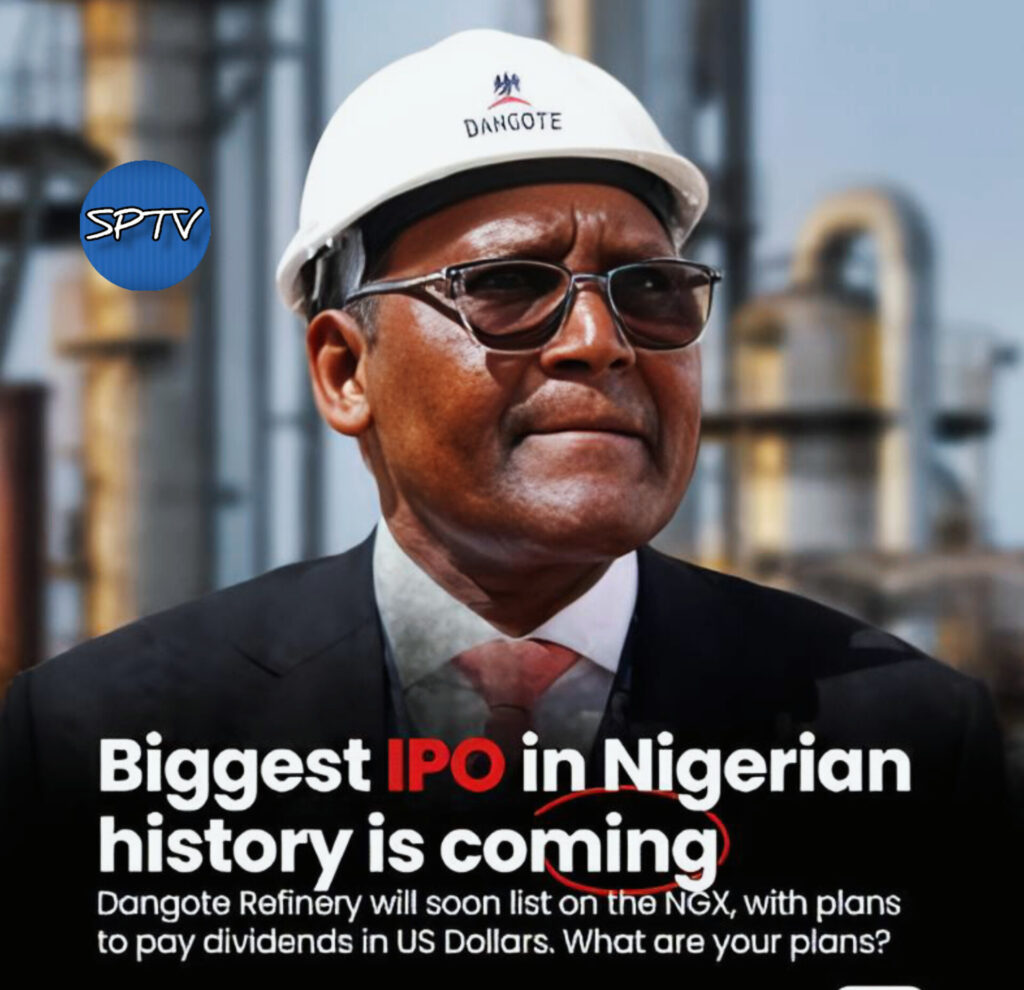
Investor interest was already running into billions of dollars before the private placement opened. Aliko Dangote said in May that requests from investors had reached almost $2 billion, with demand already exceeding the amount the company planned to allocate.
The demand later increased. Dangote Refinery completed a $2.5 billion private placement in July, with the transaction reportedly attracting demand of about $4 billion and becoming 3.7 times oversubscribed.
The fundraising gives the refinery a stronger capital base ahead of the proposed public listing and provides a clearer indication of investor appetite for the company.
Investor Requests Reached Almost $2 Billion
Aliko Dangote first disclosed the scale of investor demand during a May visit by Femi Otedola and senior executives of First HoldCo to the Dangote Refinery and Dangote Fertiliser complex in Lagos.
Dangote said investors had already requested almost $2 billion worth of shares before the private placement formally opened.
He said the company would not necessarily satisfy every request because the amount investors wanted had already exceeded the planned allocation.
The comments provided an early indication of the interest surrounding the refinery.
At the time, Dangote was targeting a September IPO. The timing later shifted as preparations continued, with more recent Reuters reporting placing the proposed listing in October.
The difference in timing highlights why the IPO should still be described as planned rather than launched.
The company has since made significant progress toward the transaction.
Dangote Refinery Raises $2.5 Billion
In July, Dangote Petroleum Refinery completed a $2.5 billion private placement.
The transaction was 3.7 times oversubscribed, according to the company. Premium Times reported that the refinery described the deal as Africa’s largest publicly disclosed primary equity private placement by value.
The private placement involved the sale of roughly 6% of the refinery, with the transaction implying a valuation of about $40 billion. Reuters also reported the $40 billion valuation following the July transaction.
Demand was considerably higher than the amount raised.
Reports put total investor demand at close to $4 billion. The transaction was completed in two stages, with about $2 billion raised initially and another $500 million later.
The strong subscription level gives Dangote a clear signal of investor interest before the company moves to the wider public market.
The $40 Billion Valuation Needs Context
The $40 billion figure attached to the July private placement should not be confused with earlier estimates surrounding the eventual IPO.
The private placement established an implied valuation of about $40 billion based on the transaction price and stake sold.
Earlier reports had placed possible IPO valuations in a broader range of roughly $40 billion to $50 billion.
Those earlier figures were estimates made before the private placement established a transaction-based valuation.
The final public market valuation will depend on the IPO structure, offer price, investor demand and market conditions.
This distinction matters because the private placement was completed between selected investors and the company. An IPO involves a broader pool of public investors and goes through a separate regulatory process.
The proposed IPO therefore should not be treated as a guaranteed $40 billion or $50 billion valuation.
The market will determine the final figure once the public offer moves forward.
IPO Could Raise About $5 Billion
Recent Reuters reporting says Dangote Refinery is expected to seek around $5 billion through the planned October IPO.
If completed at that size, the offering would rank among the largest capital market transactions in Africa.
The company has said the IPO is intended to encourage broad participation from Nigerian investors.
David Bird, chief executive of Dangote Refinery, described the proposed transaction as a “people’s IPO” in an August Reuters interview. The company wants Nigerians to have an opportunity to participate in the growth of the refinery through the domestic market.
The planned listing is also expected to support the refinery’s expansion programme.
Dangote Refinery currently operates at a nameplate capacity of 650,000 barrels per day. The company plans to increase capacity to 1.4 million barrels per day within about three years.
The expansion would more than double the refinery’s current capacity.
A $1 Billion Underwriting Commitment Adds Support
The refinery secured a $1 billion underwriting programme in August as preparations for the IPO continued.
The programme includes a completed and funded $600 million private placement component and a further $400 million underwriting commitment for the planned IPO. Dangote Industries confirmed the structure in an August 18 announcement.
The underwriting commitment provides additional support for the planned capital raising.
Still, the commitment does not mean the IPO itself has been approved.
The offering remains subject to Nigeria’s regulatory process, with the Securities and Exchange Commission responsible for reviewing and approving the public offer.
SEC Previously Halted IPO Promotion
The regulatory status of the IPO is an important part of the story.
On June 23, Nigeria’s Securities and Exchange Commission ordered an immediate halt to promotional activities linked to a purported Dangote Refinery IPO.
The SEC said no application for registration of an IPO or public offer had been filed with or approved by the commission at the time. It also warned capital market operators against accepting deposits, commitments, account openings or expressions of interest connected to the purported offering.
The regulator’s action followed the circulation of advertisements, flyers, digital banners and other promotional material encouraging investors to participate.
The SEC said such activity could mislead investors and distort market expectations.
The warning means investors should distinguish between preparations for an IPO and an approved public offer.
Since then, the refinery has continued preparations and later submitted its IPO application. Recent reporting says the application is now being processed by the SEC, with the company targeting an October launch.
PenCom Opens the Door for Pension Funds
Nigeria’s pension regulator has also taken steps to support institutional participation.
The National Pension Commission granted Pension Fund Administrators a one-off regulatory waiver allowing them to invest pension assets in the proposed Dangote Refinery IPO.
Under normal rules, pension funds face requirements involving a company’s operating history, profitability and dividend record before investing in certain equities.
PenCom said the waiver reflected the refinery’s strategic importance, business fundamentals and growth potential.
The decision gives Nigerian pension funds a potential route into the offering once the IPO receives the necessary regulatory clearance.
It does not mean pension funds have already invested in the refinery’s IPO.
The distinction is important because the public offer has not yet been completed.
The Refinery Is Expanding Beyond Nigeria
The planned IPO comes as Dangote Refinery increases its role in Nigeria’s fuel market and international petroleum trade.
The refinery reached its initial maximum capacity of 650,000 barrels per day earlier in 2026. Reuters reported in August that the facility had also tested production at about 700,000 barrels per day.
The facility has become an important source of refined products for Nigeria and international markets.
Reuters reported that Dangote Refinery became Europe’s largest jet fuel supplier in June and July 2026, showing the growing role of the facility in international fuel markets.
The company is also targeting a major increase in production capacity.
The plan is to move from 650,000 barrels per day to 1.4 million barrels per day within three years.
The expansion would increase the refinery’s ability to supply petrol, diesel, aviation fuel and other refined products to Nigeria and export markets.
Crude Supply Remains a Key Risk
Despite the refinery’s scale, crude supply is one of the issues investors will watch closely.
Dangote Refinery does not rely entirely on Nigerian crude.
Reuters reported in August that imports account for roughly 30% to 40% of the refinery’s crude intake. Imported grades include US WTI Midland, while the company also sources crude from African producers and other international markets.
The issue is partly about availability and partly about cost.
Nigeria produces large amounts of crude, but much of the country’s crude supply is tied to oil-backed loans and pre-export arrangements.
The refinery has also argued that some Nigerian crude is expensive because domestic prices are linked to international benchmarks and include costs associated with freight and logistics.
Higher feedstock costs would put pressure on refining margins.
Reuters quoted analysts warning that difficulties in accessing crude at competitive prices could affect the refinery’s costs, utilisation and valuation.
For IPO investors, this is one of the key issues to watch alongside production growth.
Why the IPO Matters to Nigeria
The proposed listing is larger than a normal company share sale.
A successful $5 billion IPO would bring a major industrial asset onto Nigeria’s public market and potentially increase the size and depth of the Nigerian Exchange.
It would also give domestic investors access to one of the country’s largest private industrial projects.
For Dangote, the public listing provides a route to raise capital for expansion while giving new investors an ownership stake in the refinery.
The company is also keeping the initial listing focused on Nigeria.
Reuters reported that Dangote Refinery does not plan a foreign listing for at least three years. The company wants to establish a longer record of production and financial performance before considering an overseas listing.
That means the Nigerian Exchange is set to remain the main market for the proposed IPO.
What Investors Should Watch
Several issues will determine how the Dangote Refinery IPO performs.
The first is regulatory approval.
The second is the final offer size and pricing.
The third is the refinery’s ability to maintain high production levels.
The fourth is the cost and availability of crude.
The fifth is the company’s planned expansion to 1.4 million barrels per day.
The final issue is valuation.
The $2.5 billion private placement provides a real transaction-based reference point of about $40 billion. But public investors will still need to assess whether the eventual IPO price offers enough value relative to the company’s earnings, growth plans, refining margins and operating risks.
Strong private-placement demand does not automatically guarantee the same level of demand from retail investors.
The IPO will provide the first major test of how the broader Nigerian market values the refinery.
Final Thoughts
Dangote Refinery is heading toward a planned October IPO after attracting billions of dollars in investor demand and completing a $2.5 billion private placement.
Aliko Dangote disclosed in May that investor requests had already reached almost $2 billion before the private placement formally opened.
The company later raised $2.5 billion by selling roughly 6% of the refinery, with the transaction implying a valuation of about $40 billion. Demand reportedly reached about $4 billion, making the placement 3.7 times oversubscribed.
The planned public offering is now expected to raise around $5 billion, according to recent Reuters reporting. If completed at that size, it would become Africa’s largest IPO to date.
The refinery has also secured $1 billion in underwriting support, while PenCom has granted pension fund managers a special waiver to participate in the proposed IPO.
Still, investors need to keep one point in mind. The IPO is planned, not yet completed. The SEC’s June intervention showed why investors should rely on formal regulatory announcements rather than early promotional campaigns.
For Dangote Refinery, the next major test will be whether strong private-market demand translates into equally strong demand when the shares reach Nigeria’s public market.
Frequently Asked Questions
When is the Dangote Refinery IPO expected?
Dangote Refinery is targeting October 2026 for the planned IPO. The final date still depends on regulatory approval and market conditions.
How much did Dangote Refinery raise before the IPO?
The refinery raised $2.5 billion through a private placement in July 2026. The transaction involved roughly 6% of the refinery’s equity and attracted demand of about $4 billion.
How much could the Dangote Refinery IPO raise?
The proposed IPO is targeting about $5 billion, according to recent reporting. If completed at this size, the offering would rank among Africa’s largest IPOs.